
 Saint Vincent & The Grenadines Travel Guide – A Caribbean Paradise of Volcanoes, Sailing & Secluded Islands
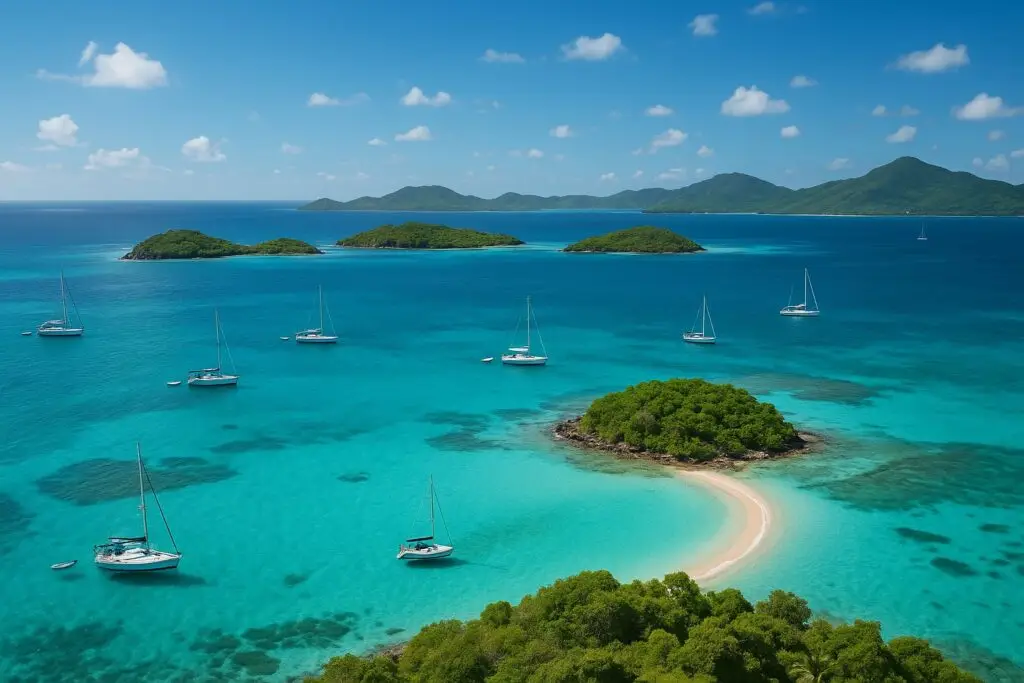
Saint Vincent & the Grenadines — often called SVG — is one of the Caribbean’s most magical archipelagos. It’s where volcanic mountains meet turquoise lagoons, where rainforest waterfalls tumble into the sea, and where dozens of tiny islands form a sailor’s paradise.
Located between Saint Lucia and Grenada, this 32-island nation stretches across 389 km² of emerald hills and coral-fringed islets. Saint Vincent, the largest island, is wild and dramatic, crowned by the active volcano La Soufrière. The southern Grenadines — including Mustique, Bequia, Canouan, Union Island, and the Tobago Cays — are tropical perfection, each with its own character and rhythm.
Whether you’re hiking through volcanic jungle, snorkeling with turtles, or relaxing on a deserted sandbar, Saint Vincent & the Grenadines feels like discovering the Caribbean’s purest soul — untouched, vibrant, and endlessly captivating.
 Geography & Landscape
The country consists of one main island (Saint Vincent) and a chain of smaller islands known as the Grenadines, stretching over 60 km southward toward Grenada.
Saint Vincent
- Area: 344 km²
- Terrain: Mountainous and volcanic, covered with rainforest.
- Highest Point: La Soufrière Volcano (1,234 m).
- Coastlines: Rugged on the Atlantic side, calm and golden on the Caribbean side.
The Grenadines
- Area: 45 km² (combined).
- Islands: Bequia, Mustique, Canouan, Mayreau, Union Island, Palm Island, Petit St. Vincent, and many uninhabited cays.
- Landscape: Low coral islands surrounded by turquoise water and coral reefs.
The contrast between Saint Vincent’s volcanic grandeur and the Grenadines’ gentle beauty makes SVG one of the Caribbean’s most diverse destinations.
 A Brief History
Indigenous Roots
Long before Columbus, the islands were inhabited by the Kalinago (Carib) and Arawak peoples. They called Saint Vincent Hairoun, meaning “Land of the Blessed.”
Colonial Conflict
- 1498: Christopher Columbus sighted Saint Vincent.
- 1600s–1700s: Fierce resistance by the Black Caribs (Garifuna) kept European settlers at bay longer than almost anywhere else in the Caribbean.
- 1763: Britain took control after years of war with France and local resistance.
- 1797: The Garifuna were exiled to Central America (modern Honduras and Belize), where their culture thrives today.
- 1834: Slavery abolished; sugar, bananas, and arrowroot became the main exports.
- 1979: Independence from Britain achieved.
Today, Saint Vincent & the Grenadines is proud of its Garifuna heritage and its reputation as one of the Caribbean’s most welcoming, unspoiled nations.
 Kingstown – The Capital
The bustling port of Kingstown, on Saint Vincent’s southwest coast, is the nation’s capital and commercial hub.
Top Attractions
- Market Square: A lively hub where locals sell spices, fruits, and crafts.
- St. George’s Anglican Cathedral: An 1820s church with stained glass donated by Queen Victoria.
- Botanical Gardens: Founded in 1765, one of the oldest in the Western Hemisphere, with tropical plants and parrots.
- Fort Charlotte: Perched 200 meters above town, offering panoramic views and a museum on Garifuna history.
- Kingstown Harbour: A deep-water port and departure point for ferries to Bequia and the Grenadines.
Kingstown is busy yet colorful — a true Caribbean capital where colonial charm meets island energy.
Book a tour
 La Soufrière Volcano – The Fiery Heart of Saint Vincent
La Soufrière dominates northern Saint Vincent, both geographically and spiritually.
About the Volcano
- Height: 1,234 meters
- Last Eruption: April 2021 (after 42 years of dormancy)
- Hike Duration: 4–5 hours round trip
- Starting Points: Bamboo Range (easier) or Richmond Vale (scenic and challenging)
The trail winds through rainforest, cloud forest, and volcanic ash fields before revealing a vast crater. The view — of neighboring islands and the Atlantic — is breathtaking.
Despite its volatile history, the volcano remains one of the Caribbean’s most awe-inspiring natural wonders.
 Beaches of Saint Vincent
Though Saint Vincent’s beaches are fewer than in its island neighbors, they’re dramatic and full of character.
| Beach | Location | Features |
|---|---|---|
| Villa Beach | Near Kingstown | Calm, golden sand, and local restaurants. |
| Indian Bay Beach | Southwest coast | Great for snorkeling and sunset views. |
| Brighton Beach | East coast | Long, wild stretch with black volcanic sand. |
| Buccament Bay | West coast | Sheltered bay with clear turquoise water. |
| Rawacou Recreation Park | Near Argyle | Beachside pools protected by volcanic rocks. |
Saint Vincent’s beaches are less polished than the Grenadines’ but more authentic — places where locals swim, fish, and unwind.
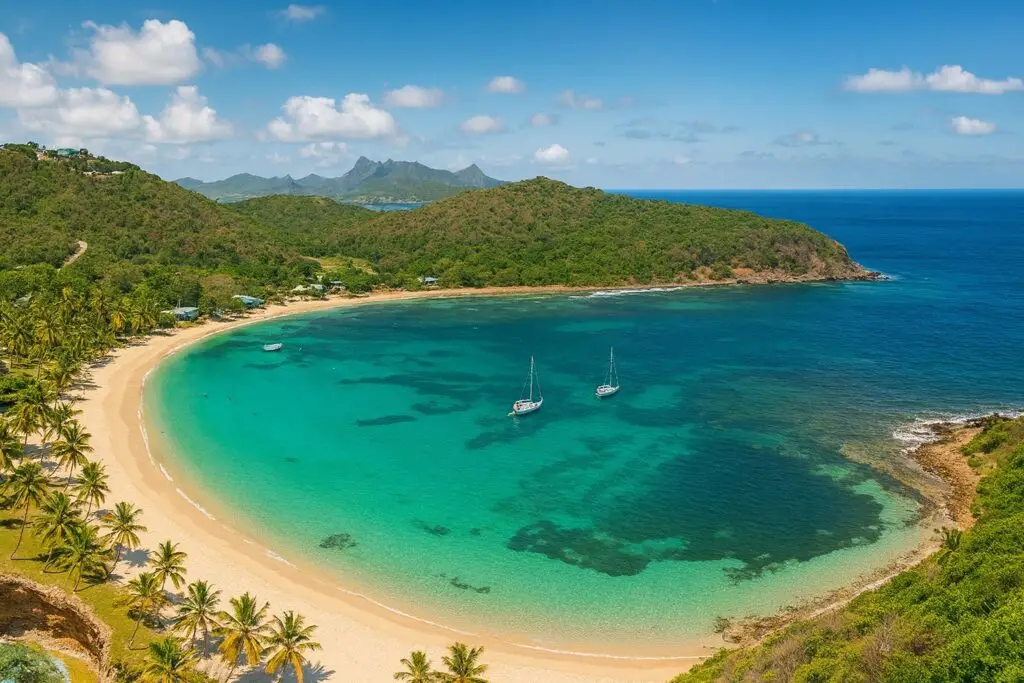
 Nature & Adventure on Saint Vincent
Dark View Falls
Twin waterfalls cascade from volcanic cliffs into cool pools, surrounded by bamboo groves.
Trinity Falls
Hidden deep in the rainforest — powerful and remote.
Vermont Nature Trail
A moderate two-hour loop through rainforest and waterfalls, home to the Saint Vincent Parrot (Amazona guildingii), the island’s national bird.
Montreal Gardens
Beautiful private gardens high in the Mesopotamia Valley — vibrant with orchids, gingers, and heliconias.
Wallilabou Bay
Famous for being a filming location for Pirates of the Caribbean; visitors can explore old film props and a peaceful beach.
Owia Salt Pond
Natural rock pools on the northern coast, filled with seawater and small fish — a favorite local hangout.
Saint Vincent’s rugged beauty invites explorers to wander off the beaten path.
 The Grenadines – Jewels of the Caribbean
The Grenadines are a sailor’s dream — a chain of small islands, each more stunning than the last. Let’s explore the highlights from north to south:
Bequia – The Gateway Island
Just a one-hour ferry from Saint Vincent, Bequia (pronounced BECK-way) is beloved for its charm and balance between local life and tourism.
Highlights:
- Port Elizabeth: The island’s main town, with waterfront cafés and a laid-back vibe.
- Princess Margaret Beach: One of the Caribbean’s most beautiful beaches, with calm water and golden sand.
- Lower Bay: Great for swimming and snorkeling.
- Old Hegg Turtle Sanctuary: Protects endangered hawksbill turtles.
- Bequia Maritime Museum: Small but fascinating — showcases the island’s boatbuilding heritage.
Bequia is small, friendly, and unforgettable — a blend of culture, community, and coastline.
Mustique – The Island of Elegance
Famous for its celebrity residents (from Mick Jagger to the late Queen Elizabeth II), Mustique is the Caribbean’s most exclusive private island.
Highlights:
- Macaroni Beach: Windswept beauty and turquoise waves.
- Basil’s Bar: Legendary beach bar where locals and royalty mingle.
- Cotton House: Historic sugar plantation turned luxury hotel.
- Nature Trails: Rolling hills, sea views, and peaceful solitude.
Despite its fame, Mustique remains understated — luxury with a quiet soul.
Canouan – Luxury Meets Nature
Once a fishing island, Canouan has transformed into a haven of barefoot luxury.
Highlights:
- Godahl Beach: Long stretch of white sand and calm waters.
- Mount Royal: Short hike with panoramic island views.
- Tamarind Beach Lagoon: Perfect for sailing and kitesurfing.
Canouan offers high-end resorts but still retains its small-island authenticity.
Mayreau – Small and Soulful
At just 4 km², Mayreau is the smallest inhabited island in the Grenadines, with around 300 residents.
Highlights:
- Salt Whistle Bay: Famous crescent-shaped beach with calm water on one side and waves on the other.
- Catholic Church Viewpoint: Offers sweeping views of the Tobago Cays.
- Local Bars & Guesthouses: Friendly, simple, and full of warmth.
Mayreau embodies true Caribbean simplicity — sand, sea, and smiles.
Union Island – The Caribbean’s Kite Paradise
Known as the “Gateway to the Grenadines,” Union Island is lively and adventurous.
Highlights:
- Clifton Harbour: Colorful main town with markets and beach bars.
- Happy Island: A tiny man-made island and bar built entirely from conch shells — a must-visit!
- Kite Beach: World-renowned for kiteboarding thanks to steady trade winds.
- Mount Taboi: Hike to the highest point for panoramic views.
Union Island combines adventure with local culture — a rare gem for explorers.
Tobago Cays – A Marine Wonderland
A protected marine park and one of the most breathtaking places in the world.
Highlights:
- Coral Reefs: Teeming with marine life — turtles, rays, and parrotfish.
- Petit Bateau & Petit Rameau: Tiny uninhabited islands with perfect beaches.
- Snorkeling with Sea Turtles: The number-one experience in the Grenadines.
- Yacht Moorings: Popular for day trips and sailing charters.
The Tobago Cays feel like heaven on Earth — five tiny islets floating in a turquoise lagoon, far from the modern world.
Petit St. Vincent & Palm Island
Two neighboring private islands that redefine seclusion.
- Palm Island: Known for its luxurious resort and palm-fringed white beaches.
- Petit St. Vincent (PSV): Exclusive hideaway resort offering barefoot luxury and total privacy.
These islands represent the ultimate Caribbean escape — remote, refined, and serene.
 Culture & Festivals
Saint Vincent & the Grenadines’ culture is rich with music, dance, and community spirit.
Language
- Official: English
- Spoken: Vincentian Creole
Music & Dance
- Calypso & Soca: Heart of Carnival.
- Steelpan: National pride, performed at festivals and events.
- Reggae & Dancehall: Woven into everyday life.
Festivals
- Vincy Mas (June–July): One of the Caribbean’s liveliest Carnivals, filled with parades, costumes, and soca competitions.
- Bequia Easter Regatta: Combines sailing with beach parties and live music.
- Nine Mornings Festival (December): Unique to SVG — nine days of early-morning festivities before Christmas.
Vincentians celebrate life with rhythm and heart — visitors are always welcome to join.
 Cuisine – Caribbean Flavor, Island Fresh
SVG’s cuisine reflects African, European, and indigenous influences, with plenty of seafood, tropical fruits, and spices.
Signature Dishes
- Roasted Breadfruit & Fried Jackfish: The national dish — simple, filling, and delicious.
- Callaloo Soup: Thick, creamy soup made with dasheen leaves and coconut milk.
- Lambi (Conch) Stew: Spicy and flavorful.
- Pelau: Rice cooked with chicken or pork, coconut milk, and pigeon peas.
- Fried Plantains, Dasheen, and Yam: Common sides.
Drinks
- Hairoun Beer: Local favorite.
- Sunset Rum: Strong and smooth.
- Sea Moss Drink: Creamy and energizing.
- Fresh Juices: Guava, mango, and passion fruit.
Food here is more than sustenance — it’s a celebration of community and flavor.
 Wildlife & Marine Life
- Saint Vincent Parrot: The island’s colorful national bird.
- Leatherback Turtles: Nest on Bequia and the Grenadines’ beaches.
- Dolphins & Whales: Often seen on boat trips.
- Coral Reefs: Home to thousands of fish species, rays, and seahorses.
- Flora: Hibiscus, breadfruit, frangipani, and mango trees cover the islands.
The islands’ ecosystems are precious — protected through national parks and marine reserves.
 Shopping & Local Crafts
- Kingstown Market: Best for spices, rum, and handmade baskets.
- Bequia Craft Market: Jewelry, paintings, and wood carvings.
- Batik & Shell Art: Popular souvenirs.
- Local Chocolate & Coffee: Grown on Saint Vincent’s fertile slopes.
 Getting Around
- Car Rental: Best for exploring Saint Vincent; drive on the left-hand side.
- Ferries: Connect Saint Vincent to Bequia, Canouan, Mayreau, and Union Island.
- Water Taxis: Common in the Grenadines for short hops.
- Flights: Small planes link Saint Vincent’s Argyle International Airport with Grenadine airstrips.
- Walking: Safe and scenic in small towns and beaches.
 Climate & Best Time to Visit
Saint Vincent & the Grenadines enjoy a warm tropical climate all year.
- Dry Season: December – May (ideal weather)
- Wet Season: June – November (lush scenery, fewer tourists)
- Average Temperature: 25–31°C (77–88°F)
- Hurricane Season: June – October (southern location makes direct hits rare)
Best time to visit: January to April — sunny skies and calm seas.
 Practical Information
- Capital: Kingstown
- Population: ~110,000
- Language: English (official), Vincentian Creole widely spoken
- Currency: Eastern Caribbean Dollar (XCD); USD accepted
- Electricity: 230V, British-style plugs (Type G)
- Time Zone: UTC -4
- Safety: Very safe and welcoming
- Health: Tap water safe to drink; hospitals in Kingstown and Bequia
 Why You’ll Love Saint Vincent & The Grenadines
Because it’s not just one island — it’s a journey through paradise.
Saint Vincent offers drama and adventure — volcanoes, waterfalls, and rainforest.
The Grenadines offer peace and perfection — coral reefs, yachts, and barefoot bliss.
It’s a place of contrasts and harmony — fiery peaks and calm lagoons, local life and luxury, discovery and serenity.
You’ll come for the beaches, but you’ll stay for the feeling: the rhythm of drums, the laughter of fishermen, the soft whisper of waves on an untouched shore.
Here, you don’t just visit the Caribbean — you live it.
 Related Articles
- 5 Once-in-a-Lifetime Floating Stays
- Top 10 Most Unique Places to Stay in Europe
- 10 Incredible Castles Around the World